
Medically reviewed by Dr. Anil Agarwal, Fetal Medicine Specialist, Lotus Diagnostic Centre
A patient-friendly guide to understanding ultrasound imaging, from pregnancy scans to abdominal assessments
What Is an Ultrasound Scan?
An ultrasound scan, also called a sonography or ultrasonography, is a non-invasive imaging technique that uses high-frequency sound waves to create real-time images of the inside of your body. Unlike X-rays or CT scans, ultrasound does not use radiation, which makes it one of the safest diagnostic tools available — safe enough for use during pregnancy.
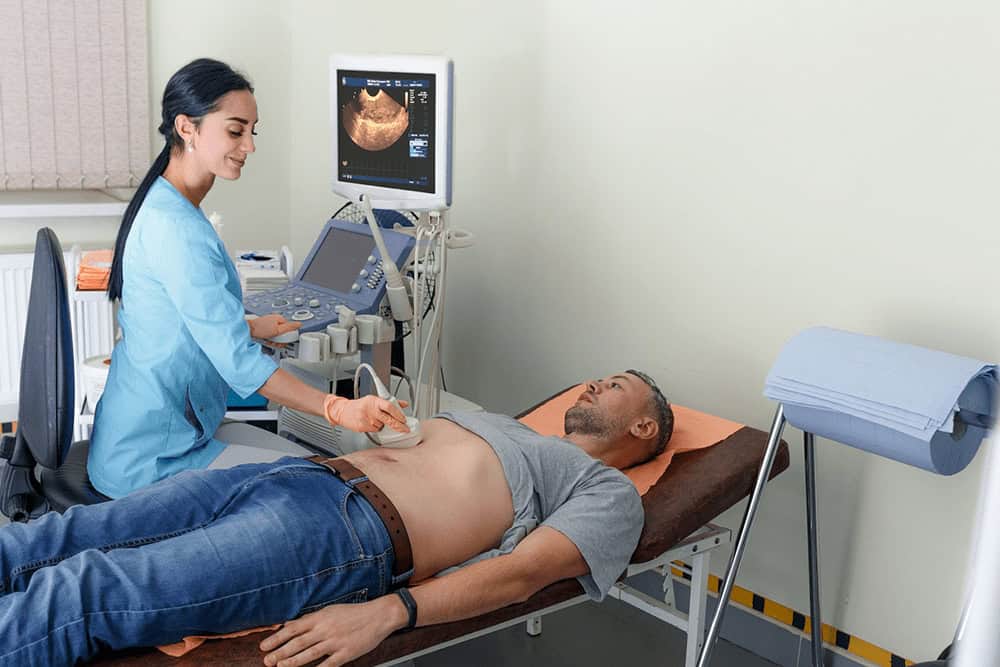
During an ultrasound, a small handheld device called a transducer is placed on your skin (with a layer of gel to improve sound transmission). The transducer sends sound waves into your body, and when these waves bounce off internal organs, tissues, and fluid, they are captured and converted into images displayed on a monitor in real time.
Ultrasound technology has advanced significantly in recent years. Modern machines produce high-resolution images that allow radiologists to examine organs, blood vessels, muscles, and developing fetuses in remarkable detail. At Lotus Diagnostic, our centres are equipped with state-of-the-art ultrasound machines operated by experienced radiologists.
Common Types of Ultrasound Scans
Abdominal Ultrasound
This is one of the most frequently ordered ultrasound scans. It examines the organs in your abdomen, including the liver, gallbladder, spleen, pancreas, kidneys, and abdominal aorta. Doctors commonly order abdominal ultrasounds to investigate abdominal pain, check for gallstones or kidney stones, evaluate liver conditions, or assess organ enlargement.
Pelvic Ultrasound
A pelvic ultrasound examines the organs in the pelvic region. In women, this includes the uterus, ovaries, fallopian tubes, cervix, and bladder. It is commonly used to evaluate menstrual irregularities, pelvic pain, ovarian cysts, fibroids, and PCOS. In men, pelvic ultrasound can assess the bladder and prostate.
Transvaginal Ultrasound (TVS)
A transvaginal ultrasound uses a slim transducer inserted into the vagina to produce highly detailed images of the uterus, ovaries, and surrounding structures. It provides clearer images than an abdominal scan for evaluating conditions like ovarian cysts, fibroids, PCOS, endometriosis, early pregnancy, and unexplained pelvic pain. No fasting is required, and the procedure takes approximately 15 minutes.
Obstetric (Pregnancy) Ultrasound
Pregnancy ultrasound is probably the most well-known application of this technology. Different types of pregnancy scans are recommended at different stages.
Dating scan (6–9 weeks): Confirms pregnancy, determines gestational age, checks for heartbeat, and identifies single or multiple pregnancies.
NT scan (11–14 weeks): Nuchal translucency scan measures the fluid at the back of the baby’s neck to screen for chromosomal abnormalities like Down syndrome.
Anomaly scan (18–22 weeks): Also called the mid-pregnancy scan or level 2 scan, this detailed examination checks the baby’s organs, bones, brain, heart, and overall development for structural abnormalities.
Growth scan (28–36 weeks): Monitors the baby’s growth, position, amniotic fluid levels, and placental health in the third trimester.
Doppler scan: Measures blood flow through the umbilical cord and key fetal blood vessels, particularly important in high-risk pregnancies.
Thyroid Ultrasound
A thyroid ultrasound examines the thyroid gland in your neck for nodules, cysts, enlargement, or other abnormalities. It is often ordered when blood tests show abnormal thyroid function or when a doctor feels a lump during physical examination.
Breast Ultrasound
Breast ultrasound is used alongside or as an alternative to mammography to evaluate breast lumps, cysts, and other changes. It is particularly useful for women with dense breast tissue, where mammograms may be less effective.
Doppler Ultrasound
A Doppler ultrasound evaluates blood flow through your blood vessels. It can detect blocked or reduced blood flow, blood clots, and problems with blood flow to the heart, legs, or other organs. Colour Doppler and power Doppler variants provide visual maps of blood flow direction and speed.
When Should You Get an Ultrasound?
Your doctor may recommend an ultrasound scan for many reasons. Common indications include persistent abdominal pain, unexplained swelling, abnormal blood test results, suspected gallstones or kidney stones, liver or kidney conditions, thyroid nodules, breast lumps, pregnancy monitoring, menstrual irregularities, fertility assessment, or evaluation of soft tissue injuries.
Ultrasound is also frequently used as part of comprehensive health checkup packages to screen the abdominal organs even in the absence of specific symptoms.
How to Prepare for an Ultrasound
Preparation varies by scan type. For an abdominal ultrasound, you may be asked to fast for 6 to 8 hours beforehand, as food in the stomach can obscure the images. For a pelvic ultrasound, you may need a full bladder, which means drinking water about an hour before the scan. For a thyroid or breast ultrasound, no special preparation is typically needed.
Your diagnostic centre will provide specific preparation instructions when you book your appointment. In general, wear comfortable, loose-fitting clothing that allows easy access to the area being scanned.
What to Expect During the Scan
An ultrasound scan is painless and typically takes 15 to 30 minutes, though some specialised scans may take longer. You will lie on an examination table, and the sonographer or radiologist will apply a water-based gel to the area being examined. The transducer is then moved across your skin. You may feel slight pressure from the transducer, especially if the area is tender, but there is no pain from the sound waves themselves. For pregnancy scans, you may be able to see your baby on the monitor during the examination. After the scan, the gel is wiped off and you can resume normal activities immediately. There are no side effects or recovery time required.
Ultrasound Scans at Lotus Diagnostic Centre
Lotus Diagnostic offers a comprehensive range of ultrasound and imaging services at our centres in Koramangala and Indiranagar, Bangalore. All scans are performed by experienced radiologists and fetal medicine specialists using high-end ultrasound equipment.
Scans available: Abdominal ultrasound, pelvic ultrasound, obstetric scans (dating, NT, anomaly, growth, Doppler), fetal echo, thyroid ultrasound, breast ultrasound, musculoskeletal ultrasound, transrectal ultrasound, transvaginal scans, and Doppler studies.
Other imaging services: X-ray (digital), ECG, 2D echocardiography, DEXA scan (bone density), mammography, treadmill test (TMT).
For X-rays, you can walk in without an appointment. For ultrasound scans, we work on a first-come-first-serve token system. Our reception will inform you of available time slots when you visit or call.
About the Medical Reviewer
Dr. Anil Agarwal is a Fetal Medicine Specialist and Radiologist with 35+ years of experience at Lotus Diagnostic Centre, Bangalore. His qualifications include MBBS, RDMS (USA).
Book your ultrasound scan at lotusdiagnostic.com or call 9099390993. Indiranagar: CMH Road, Koramangala: 18th Main, 6th Block.
Frequently Asked Questions
Is ultrasound safe during pregnancy?
Yes. Ultrasound uses sound waves, not radiation, and is considered safe for both mother and baby. It has been used in pregnancy care for decades with no known harmful effects.
Do I need a prescription for an ultrasound?
A doctor’s referral is recommended to ensure the correct scan is performed. However, for routine scans, you can contact us directly and our team will guide you.
How quickly will I get my results?
Most ultrasound reports are available on the same day. You can collect them from the centre or download them online through our report portal.
Is an ultrasound painful?
No. Ultrasound is completely painless. You may feel slight pressure from the transducer on your skin, but this is mild. Scans requiring a full bladder may cause some discomfort, but the scan itself is quick.